When you want to celebrate someone’s success, “congratulations” is a natural and widely used expression—but it isn’t the only way to show that you’re happy for them. Depending on the situation, you might want to sound warm, enthusiastic, professional, casual, heartfelt, or playful. That’s where knowing other ways to say congratulations can help you choose words that fit the moment.
Other ways to say congratulations include expressions such as well done, great job, good for you, way to go, you did it, hats off to you, I’m happy for you, and you should be proud of yourself. However, each expression can carry a slightly different tone or level of enthusiasm. Some work well in professional messages, while others feel more natural when congratulating a friend, family member, coworker, or someone who has achieved an important milestone.
In this guide, you’ll discover different ways to say congratulations, what each expression means, when to use it, and how to use it naturally in a sentence. You’ll also find options for formal and professional situations, casual conversations, heartfelt messages, work achievements, graduations, promotions, weddings, birthdays, and other special occasions.
By the end, you’ll have a useful collection of natural alternatives to “congratulations” so you can express genuine excitement and celebrate someone’s achievement without repeating the same phrase every time.
What Does “Congratulations” Mean?
Congratulations is an expression used to acknowledge and celebrate someone’s success, achievement, good fortune, or important milestone.
You might congratulate someone because they:
- Graduated from school or college
- Got a new job
- Received a promotion
- Won an award
- Got married
- Had a baby
- Bought a home
- Completed a difficult project
- Reached a personal goal
- Won a competition
- Passed an exam
- Published a book
- Started a business
For example:
“Congratulations on your promotion!”
The word recognizes the person’s achievement and communicates positive feelings about their success.
“Congratulations” can sound formal or casual depending on the surrounding words. You could write:
“Congratulations on your new position. Wishing you continued success.”
Or send a friend:
“Congrats! You did it!”
Both messages express the same basic idea, but the tone is very different.
Best Other Ways to Say Congratulations
Here are 27 natural alternatives you can use in texts, emails, cards, conversations, social media posts, and professional messages.
1. Well Done!
Meaning: You successfully completed something or achieved a good result.
Best for: Exams, projects, work achievements, performances, and personal goals.
Tone: Friendly, neutral, or professional.
Example:
“Your presentation was excellent. Well done!”
“Good job” and “well done” are especially useful when you’re praising how someone performed, rather than simply acknowledging an event.
2. Great Job!
Meaning: You did something very successfully.
Best for: School, work, sports, creative projects, and everyday achievements.
Tone: Friendly and enthusiastic.
Example:
“You finished the entire project ahead of schedule. Great job!”
This is one of the easiest alternatives when you want your message to sound natural without becoming overly formal.
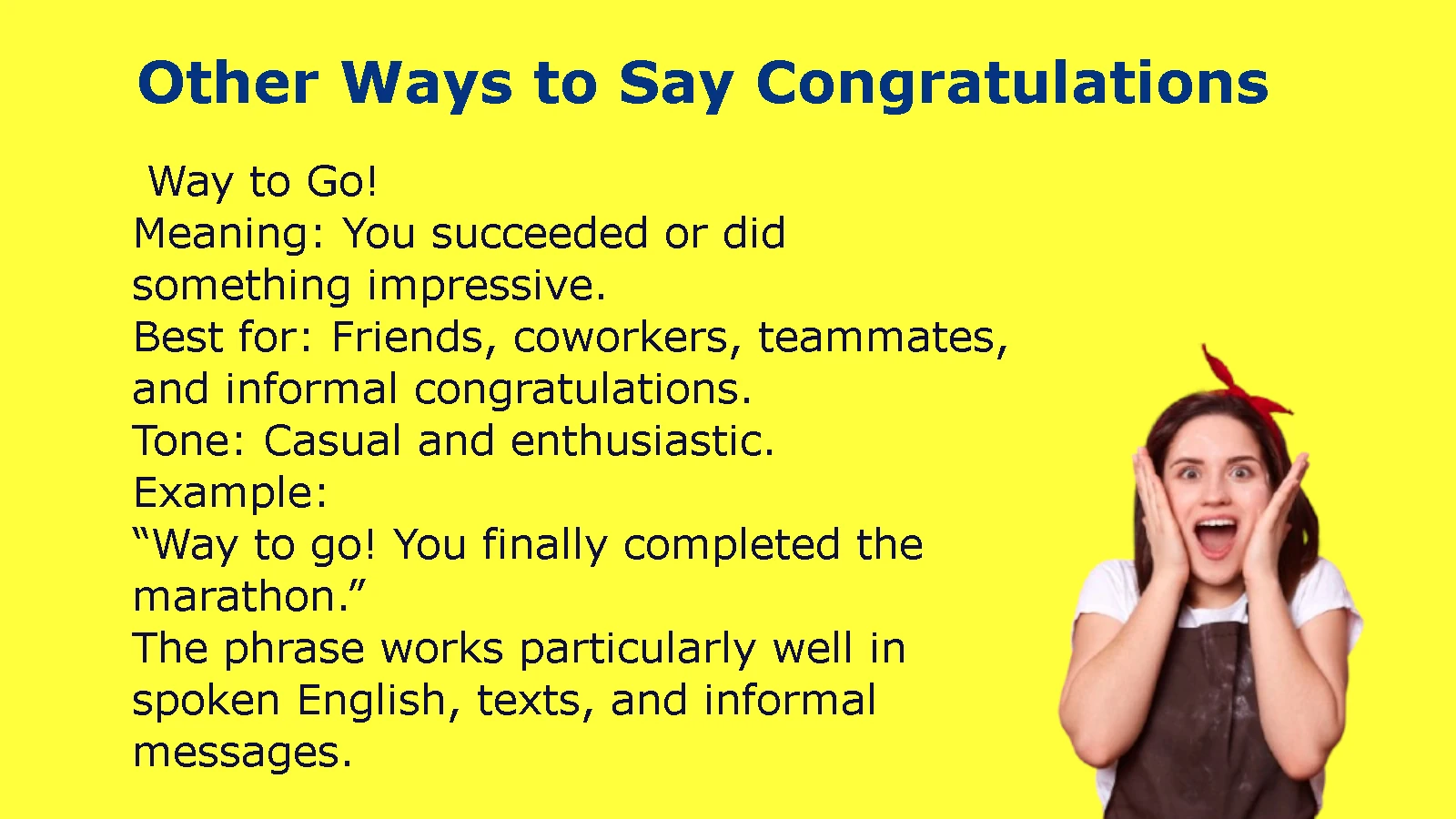
3. Way to Go!
Meaning: You succeeded or did something impressive.
Best for: Friends, coworkers, teammates, and informal congratulations.
Tone: Casual and enthusiastic.
Example:
“Way to go! You finally completed the marathon.”
The phrase works particularly well in spoken English, texts, and informal messages.
4. Good for You!
Meaning: I’m pleased about something positive that happened to you.
Best for: Personal accomplishments, lifestyle changes, new opportunities, or decisions that benefit someone.
Tone: Friendly and casual.
Example:
“You decided to go back to school? Good for you!”
Context matters here. Depending on tone of voice, “good for you” can sometimes sound sarcastic. In a written message, adding warmth or enthusiasm helps make your meaning clear.
5. I’m Happy for You
Meaning: Your good news makes me genuinely happy because it matters to you.
Best for: Weddings, engagements, promotions, new jobs, relationships, graduations, and other personal milestones.
Tone: Warm and sincere.
Example:
“You’ve worked toward this promotion for years, and I’m really happy for you.”
This phrase is particularly useful when you want to emphasize emotional support, rather than simply praise an achievement.
6. You Did It!
Meaning: You successfully reached a goal or completed something difficult.
Best for: Major personal goals, graduations, exams, competitions, and challenging projects.
Tone: Enthusiastic and personal.
Example:
“You submitted your final dissertation? You did it!”
The phrase works best when you know the person has been working toward the goal for some time.
7. Nice Work!
Meaning: You performed a task successfully or produced something good.
Best for: Work, school, creative projects, and everyday accomplishments.
Tone: Friendly and professional.
Example:
“Nice work on the report. The recommendations are especially clear.”
“Nice work” is a useful workplace alternative because it sounds positive without being overly emotional.
8. I’m So Proud of You
Meaning: I’m deeply pleased with what you’ve accomplished.
Best for: Family members, close friends, children, students, or people with whom you have a close relationship.
Tone: Warm and emotional.
Example:
“You’ve overcome so many challenges to get here. I’m so proud of you.”
This isn’t always appropriate in professional situations because it can imply a personal relationship or authority that may not exist.
9. That’s Fantastic!
Meaning: That’s wonderful or very exciting news.
Best for: Announcements, achievements, opportunities, and personal milestones.
Tone: Enthusiastic and friendly.
Example:
“You got accepted into your first choice college? That’s fantastic!”
It’s a flexible expression because it can respond to many kinds of good news without sounding repetitive.
10. What an Achievement!
Meaning: What you’ve accomplished is significant or impressive.
Best for: Major professional, academic, athletic, or personal accomplishments.
Tone: Warm and somewhat formal.
Example:
“Publishing your first novel is a remarkable achievement. What an achievement!”
A more natural variation in many situations would be:
“Publishing your first novel is such an achievement.”
That version avoids repeating “achievement” in the same sentence.
11. You Deserve It!
Meaning: The person has earned the reward, recognition, opportunity, or success they received.
Best for: Promotions, awards, recognition, raises, and other earned accomplishments.
Tone: Warm and supportive.
Example:
“Congratulations on becoming department manager. You deserve it!”
This expression focuses on worthiness, not merely the fact that something good happened.
12. Hats Off to You!
Meaning: I respect and admire what you accomplished.
Best for: Difficult achievements, impressive performances, and major accomplishments.
Tone: Friendly and expressive.
Example:
“You managed the entire event with only two weeks to prepare. Hats off to you!”
It’s a little more expressive than “well done,” making it useful when you want to show admiration.
13. Kudos to You!
Meaning: You deserve recognition or praise for what you’ve accomplished.
Best for: Work achievements, successful projects, professional accomplishments, and public recognition.
Tone: Friendly to professional.
Example:
“Kudos to you for leading the team through such a successful launch.”
“Kudos” works especially well in workplace messages because it recognizes someone’s contribution without sounding overly personal.
14. You Nailed It!
Meaning: You did something extremely well or achieved exactly what you wanted.
Best for: Presentations, performances, interviews, tests, creative work, and other specific performances.
Tone: Casual and enthusiastic.
Example:
“That presentation was excellent. You nailed it!”
This isn’t a universal substitute for “congratulations.” It works best when the person performed a task particularly well.
15. I Knew You Could Do It!
Meaning: I believed you were capable of succeeding.
Best for: Difficult goals, competitions, exams, career milestones, and long term projects.
Tone: Warm and encouraging.
Example:
“You passed the bar exam! I knew you could do it!”
The expression adds a personal element because it tells the person that you believed in their ability before they succeeded.
16. I’m Thrilled for You
Meaning: I’m extremely happy about your good news or success.
Best for: Major personal and professional milestones.
Tone: Warm and enthusiastic.
Example:
“You’re moving into your own studio? I’m thrilled for you!”
This phrase expresses stronger emotion than the straightforward “I’m happy for you.”
17. That’s Wonderful News!
Meaning: The information you’ve shared is very positive and pleasing.
Best for: Engagements, marriages, new jobs, pregnancies, graduations, and other major announcements.
Tone: Warm and friendly.
Example:
“You’re expecting your first child? That’s wonderful news!”
It works particularly well as a response to an announcement rather than as a standalone congratulatory statement.
18. What Great News!
Meaning: That’s excellent or exciting news.
Best for: Personal announcements, career news, academic achievements, and opportunities.
Tone: Friendly and enthusiastic.
Example:
“You’ve been accepted into the program? What great news!”
Like “that’s wonderful news,” this phrase responds naturally when someone has just told you something positive.
19. You Should Be Proud of Yourself
Meaning: Your accomplishment is something you have every reason to feel good about.
Best for: Difficult personal goals, academic achievements, career progress, and long term efforts.
Tone: Warm and supportive.
Example:
“You worked on that project for six months. You should be proud of yourself.”
This expression focuses on personal satisfaction rather than outside recognition.
20. You Earned It
Meaning: You achieved or received something because your effort or performance justified it.
Best for: Promotions, awards, recognition, raises, and other accomplishments connected to effort.
Tone: Confident and supportive.
Example:
“After everything you contributed to the project, you earned that promotion.”
It is stronger and more specific than simply saying “congratulations.”
21. I’m Delighted for You
Meaning: I’m very pleased about your success or good news.
Best for: Professional relationships, formal messages, cards, and significant personal events.
Tone: Warm and somewhat formal.
Example:
“I’m delighted for you and wish you every success in your new role.”
This is a good choice when “I’m so happy for you” feels too casual.
22. Cheers to Your Success!
Meaning: Let’s celebrate your achievement and success.
Best for: Celebrations, parties, social posts, milestones, and informal messages.
Tone: Warm and celebratory.
Example:
“You’ve launched your own business after years of planning. Cheers to your success!”
The word “cheers” gives the expression a distinctly celebratory feel.
23. Here’s to Your Success!
Meaning: I’m celebrating your achievement and wishing you continued success.
Best for: Career milestones, business achievements, graduations, and new beginnings.
Tone: Warm and professional.
Example:
“Congratulations on your new position. Here’s to your continued success!”
This phrase can work especially well in a card, speech, toast, or professional message.
24. I’m Glad to See Your Hard Work Pay Off
Meaning: I’m pleased that your effort produced the result you wanted.
Best for: Career, academic, athletic, and long term personal achievements.
Tone: Warm and professional.
Example:
“After months of preparation, I’m glad to see your hard work pay off.”
This is an excellent choice when you want to recognize effort as well as the final result.
25. You’ve Earned Every Bit of This
Meaning: Your success or recognition is fully deserved because of your effort and accomplishments.
Best for: Major promotions, awards, career achievements, and difficult personal goals.
Tone: Warm and strongly supportive.
Example:
“After everything you’ve accomplished this year, you’ve earned every bit of this recognition.”
It’s more personal and emphatic than the simple “you earned it.”
26. What a Milestone!
Meaning: This is an important stage or achievement in someone’s life, career, or progress.
Best for: Anniversaries, graduations, business growth, career achievements, and personal goals.
Tone: Warm and celebratory.
Example:
“Ten years in business is an incredible milestone. What a milestone!”
In many cases, you can make the sentence more natural by adding the specific achievement:
“Ten years in business is an incredible milestone.”
27. Celebrating You Today!
Meaning: I’m recognizing and celebrating you and your achievement.
Best for: Cards, social media posts, birthdays, graduations, promotions, and personal milestones.
Tone: Warm and personal.
Example:
“Celebrating you today and everything you’ve accomplished this year!”
This phrase feels especially natural in a social post or heartfelt card.
Professional Ways to Say Congratulations
In a professional setting, your message should usually be positive, specific, and appropriate to your relationship.
Some of the strongest options include:
- Well done!
- Great job!
- Nice work!
- Kudos to you!
- What an achievement!
- You earned it.
- I’m delighted for you.
- I’m glad to see your hard work pay off.
- Here’s to your continued success!
For example, after a coworker receives a promotion:
“Congratulations on your promotion. Your leadership and hard work have clearly paid off.”
Or:
“Well done on the promotion. Wishing you continued success in your new role.”
A professional congratulatory message becomes stronger when you mention the specific accomplishment instead of sending only “Congratulations.”
Formal Ways to Say Congratulations
For formal correspondence, awards, ceremonies, business announcements, or professional cards, consider:
- I extend my congratulations to you.
- Please accept my sincere congratulations.
- My sincere congratulations on this achievement.
- What an achievement.
- I’m delighted for you.
- I wish you continued success.
- Here’s to your continued success.
- You have earned this recognition.
For example:
“Please accept my sincere congratulations on your appointment to the position.”
Or:
“I wish you continued success in your new role.”
These expressions work because they recognize the accomplishment without sounding overly familiar.
Casual Ways to Say Congratulations
When you’re talking to a close friend, sibling, teammate, or someone you know well, you can be much more relaxed.
Try:
- You did it!
- Way to go!
- Great job!
- You nailed it!
- Good for you!
- I knew you could do it!
- That’s fantastic!
- I’m so happy for you!
- You deserve it!
- Cheers to you!
For example:
“You passed! You did it!”
Or:
“You finally got the job. Way to go!”
These phrases sound more natural in texts and everyday conversation than formal expressions such as “Please accept my sincere congratulations.”
How to Say Congratulations in a Work Email
A workplace congratulatory email usually benefits from three things:
- Mention the achievement.
- Express genuine positive feelings.
- Add a brief wish for future success when appropriate.
Instead of:
“Congratulations!”
you could write:
“Congratulations on your promotion! You’ve done excellent work on the team, and I’m excited to see you take on this new role.”
For a colleague who completed an important project:
“Great job on the successful launch. Your attention to detail and steady leadership made a real difference.”
For someone receiving an award:
“Congratulations on this well deserved recognition. Your contribution to the project has been outstanding.”
For a new job:
“Congratulations on the new position! I’m glad to see your hard work pay off, and I wish you all the best in your new role.”
The most natural professional messages don’t simply replace “congratulations” with another phrase. They explain why you’re congratulating the person.
Other Ways to Say Congratulations on a Promotion
A promotion deserves wording that recognizes both the achievement and the work behind it.
You could say:
- Well done on the promotion!
- You earned it!
- You deserve this opportunity.
- I’m so happy for you.
- I’m glad to see your hard work pay off.
- Congratulations on your new role!
- Wishing you continued success in your new position.
- What an achievement!
Example:
“Congratulations on your promotion! You’ve worked hard for this opportunity, and you absolutely deserve the recognition.”
For a coworker, a slightly more restrained version may be better:
“Congratulations on your promotion. Wishing you continued success in your new role.”
Other Ways to Say Congratulations on Graduation
Graduation is a major milestone, so phrases that recognize effort and achievement work particularly well.
Try:
- You did it!
- Well done!
- What an achievement!
- You should be proud of yourself.
- I’m so proud of you.
- Your hard work paid off!
- Here’s to your next chapter!
- Wishing you continued success.
Example:
“You did it! All those late nights and long study sessions paid off. Congratulations on your graduation!”
For a formal graduation card:
“Congratulations on this important achievement. Wishing you continued success in everything ahead.”
Other Ways to Say Congratulations on a New Job
A new job is both an accomplishment and a new beginning.
Natural expressions include:
- Congratulations on your new role!
- That’s fantastic news!
- I’m so happy for you.
- You earned it!
- Well done!
- Wishing you all the best in your new position.
- Here’s to your success!
- I’m thrilled for you.
Example:
“You got the job! That’s fantastic news. I’m thrilled for you and wish you all the best in your new role.”
Other Ways to Say Congratulations on an Achievement
When someone accomplishes something difficult, you can emphasize the effort involved.
For example:
“Well done! You worked incredibly hard for this.”
Or:
“You earned every bit of this recognition.”
Another natural option is:
“I’m glad to see your hard work pay off.”
For an informal message:
“You nailed it! I knew you could do it.”
The best choice depends on whether you want to emphasize success, effort, admiration, or emotional support.
Other Ways to Say Congratulations to a Friend
With a close friend, warmth usually matters more than formality.
You could say:
“You did it! I’m so proud of you.”
“Way to go! You absolutely crushed it.”
“I’m so happy for you. You deserve this.”
“That’s amazing news! Cheers to you.”
“I knew you could do it!”
These expressions feel personal because they communicate more than simple acknowledgment.
Other Ways to Say Congratulations on Social Media
Social media messages can be short, enthusiastic, and personal.
Some natural options include:
- So happy for you!
- You did it!
- Way to go!
- What an achievement!
- You deserve it!
- Cheers to your success!
- So proud of you!
- Celebrating you today!
- Here’s to the next chapter!
- Well deserved!
For example:
“So proud of you and everything you’ve accomplished. Here’s to the next chapter!”
Or:
“What an achievement! So happy for you and excited to see what’s next.”
How to Choose the Right Alternative
The best alternative depends on your relationship with the person and the type of achievement.
| Situation | Natural Choice | Why It Works |
| Coworker’s promotion | Well done! | Positive without being overly personal |
| Close friend’s achievement | I’m so happy for you! | Shows genuine personal support |
| Difficult personal goal | You did it! | Emphasizes reaching the goal |
| Professional award | Kudos to you! | Recognizes achievement professionally |
| Major accomplishment | What an achievement! | Emphasizes significance |
| New job | I’m thrilled for you. | Expresses genuine excitement |
| Graduation | You should be proud of yourself. | Recognizes effort and achievement |
| Successful presentation | You nailed it! | Praises strong performance |
| Promotion | You deserve it! | Emphasizes earned recognition |
| Formal announcement | I extend my congratulations. | Appropriate for formal communication |
| Friend’s exciting news | That’s fantastic! | Natural and enthusiastic |
| Long term project | I’m glad to see your hard work pay off. | Recognizes effort |
| Award or recognition | You earned it. | Connects success with merit |
| Informal celebration | Way to go! | Casual and enthusiastic |
| Major milestone | What a milestone! | Highlights importance |
| Card or social post | Celebrating you today! | Warm and personal |
Common Mistakes When Congratulating Someone
Using overly formal language with close friends
You probably wouldn’t text your best friend:
“Please accept my sincere congratulations on your achievement.”
It’s grammatically fine, but it may sound stiff.
A natural alternative would be:
“You did it! I’m so proud of you!”
Using casual language in a formal message
A phrase like:
“You nailed it!”
might work for a close colleague but could sound too informal in a formal letter from an organization.
In that situation, try:
“Congratulations on this outstanding achievement.”
Saying only “Congratulations”
There is nothing wrong with “congratulations,” but a little specificity can make the message more meaningful.
Instead of:
“Congratulations!”
try:
“Congratulations on your promotion! You’ve worked hard for this opportunity.”
The second message feels more personal because it identifies the reason for the celebration.
Using “good for you” without considering context
“Good for you!” is often positive, but it can sound sarcastic depending on the situation and delivery.
For an important professional achievement, “Well done” or “Congratulations on your achievement” is less ambiguous.
Confusing praise with congratulations
Not every compliment is a substitute for congratulations.
For example, “You look great” is a compliment, not a natural way to congratulate someone.
Similarly, “I appreciate your effort” praises someone’s work but doesn’t necessarily celebrate a successful outcome.
The strongest alternatives usually either recognize the achievement, express happiness about it, or praise the person’s successful effort.
Congratulations vs. Well Done
“Congratulations” and “well done” overlap, but they aren’t identical.
It acknowledges a successful event, achievement, or milestone.
Well done praises the quality of someone’s performance or work.
“Well done on completing the project ahead of schedule.”
You can use both together:
“Congratulations on the promotion, and well done on all the work that got you there.”
Congratulations vs. Good Job
“Good job” usually evaluates someone’s performance.
“Good job on the presentation.”
“Congratulations” celebrates the achievement itself.
“Congratulations on winning the award.”
The two can naturally appear together:
“Congratulations on winning the award. Great job!”
Congratulations vs. I’m Happy for You
These phrases communicate different things.
Congratulations directly recognizes someone’s achievement or good fortune.
I’m happy for you emphasizes your emotional response to their good news.
Compare:
“Congratulations on your new job!”
with:
“I’m so happy for you! You worked really hard for this.”
The second feels more personal because it focuses on the relationship between the speaker and the recipient.
Frequently Asked Questions
What is another way to say congratulations?
Some natural alternatives include well done, great job, way to go, good for you, you did it, nice work, I’m happy for you, you deserve it, hats off to you, kudos to you, and what an achievement.
The best choice depends on the context.
What is a professional way to say congratulations?
Professional choices include well done, nice work, kudos to you, what an achievement, I extend my congratulations, and wishing you continued success.
For workplace messages, mentioning the specific achievement usually makes the message stronger.
What is a casual way to say congratulations?
Try you did it, way to go, great job, you nailed it, good for you, that’s fantastic, or I’m so happy for you.
How do you congratulate someone without saying congratulations?
You can say:
“Well done!”
“You did it!”
“I’m so happy for you!”
“You deserve it!”
“What an achievement!”
“I knew you could do it!”
“That’s fantastic news!”
What can I say instead of congratulations in a work email?
Depending on the situation, use well done, nice work, kudos to you, what an achievement, you earned it, or wishing you continued success.
For example:
“Well done on the promotion. Wishing you continued success in your new role.”
What is the best way to congratulate a friend?
A warm and personal message usually works best:
“I’m so happy for you! You worked so hard for this, and you absolutely deserve it.”
How do you congratulate someone on a promotion?
You can say:
“Congratulations on your promotion! You’ve worked hard for this, and you deserve it.”
Or, for a more formal message:
“Congratulations on your promotion. Wishing you continued success in your new role.”
How do you congratulate someone on graduation?
Try:
“You did it! Congratulations on your graduation. You should be incredibly proud of everything you’ve accomplished.”
How do you congratulate someone on a new job?
You could write:
“Congratulations on the new job! I’m thrilled for you and wish you all the best in your new role.”
Is “well done” the same as “congratulations”?
Not exactly. Well done primarily praises someone’s performance or effort, while congratulations recognizes an achievement, milestone, or piece of good fortune. They can overlap in many situations.
Is “good for you” a good way to say congratulations?
Yes, in casual situations where you genuinely want to celebrate someone’s good news. However, tone matters because “good for you” can sound sarcastic in some contexts.
Final Thoughts
There are plenty of natural other ways to say congratulations, but you don’t need to replace the word every time. The best expression is the one that matches the achievement and your relationship with the person.
Use well done or nice work when you’re praising someone’s performance. Choose I’m happy for you or I’m so proud of you when you want to express personal warmth. Try you did it or way to go for an enthusiastic, casual message. In professional settings, kudos to you, what an achievement, or wishing you continued success can work well.
Most importantly, make your message specific when you can. “Congratulations on your promotion!” feels more thoughtful than simply saying “Congratulations,” and “You worked hard for this promotion, and I’m so happy to see it pay off” adds an even more personal touch.













